What a pool renovation costs in the Redlands
Updated October 2026
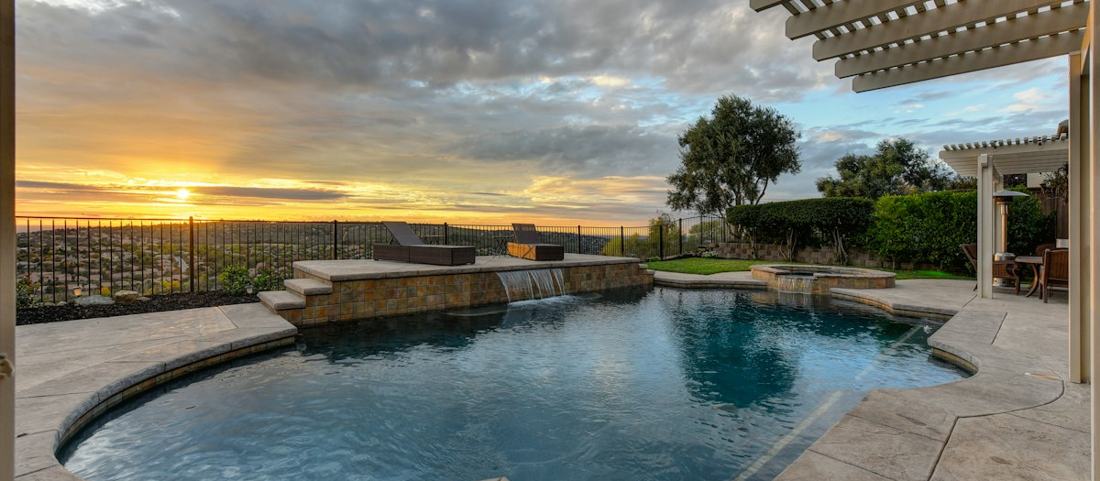
The figures below are typical 2026 guide ranges, drawn from published Australian pricing and local quoting patterns. They are guide pricing only: every pool is different, so get a fixed written quote before any work starts. In Queensland, building work valued over $3,300 generally requires a QBCC-licensed contractor, and any electrical work must be done by a licensed electrician.
Quick price guide by scope
- Pool painting (sound shell, epoxy or rubber, incl. preparation): commonly low thousands, roughly $2,000 to $5,000
- Pebble resurfacing on a standard family pool: roughly $8,000 to $15,000
- Premium quartz or glass bead resurfacing: roughly $12,000 to $22,000
- Fibreglass lining over an existing shell: broadly similar to pebble, often $8,000 to $15,000
- Waterline retile: a few thousand dollars, glass mosaics at the top end
- New coping around a typical pool: roughly $5,000 to $15,000 depending on stone
- Equipment renewal (pump, filter, chlorinator): roughly $3,000 to $6,000, heat pumps extra
- Barrier and compliance repairs: a few hundred dollars for gate and signage fixes, low thousands for fence replacement
- Full renovation (new interior, tiles, coping, equipment): commonly $20,000 to $50,000 and beyond on large or difficult pools
A painted finish lasts roughly 5 to 7 years in Australian conditions, while pebble and quartz commonly last 15 to 20, which is why the cheaper job is not always the cheaper decade. In a subtropical climate with a long swim season and hard UV, plan toward the lower end of those lifespans rather than the upper.
What moves the price in the Redlands
Pool size. Resurfacing and tiling are priced substantially on area, so a 10m pool costs meaningfully more than a 7m pool in both materials and days on site.
Access, and it splits the region in two. The compact 1970s and 80s lots through Alexandra Hills, and the older bayside blocks at Thorneside, Birkdale and Cleveland, often give you a side path of a metre or so with the air conditioner, the hot water unit and the fence posts all taking a share of it. No machine fits, so every bag of old interior out and every bag of new material in goes by barrow and by hand. On the acreage at Sheldon, Mount Cotton and rural Redland Bay the opposite applies: machines fit, but long driveways, gates and soft ground add their own time. On the canal fronts at Raby Bay and Aquatic Paradise the only open side of the block is frequently the water, which makes access a real line item. Tell the renovator your side access width when you ask for a quote and the number you get will be realistic.
Draining the pool. Pool water should be discharged in line with the current local requirements rather than straight into the street stormwater system. Water and sewerage in the Redlands is supplied by Redland City Council itself, through its water and wastewater business, City Water (previously Redland Water), so confirm the current discharge rules with the council before anyone pulls a plug. Emptying a concrete shell in wet ground or where the water table sits high, which covers a lot of the low-lying bayside strip, has to be planned so the shell does not lift. Difficult drain-downs add time and cost.
Digging on low-lying ground. The Redland City Plan maps potential acid sulfate soils across the coastal and estuarine lowland, and the planning rules require that development minimise and manage disturbance so acid and metal contaminants are not released. In practice that means excavation and dewatering below the natural surface on the low bayside and estuarine blocks can bring acid sulfate soil management into the job. This site does not state a trigger depth, because the thresholds come from the state planning policy and the City Plan mapping and are site-specific. The contractor confirms what applies to your block before quoting.
Condition of what is there. A drummy old surface that must be fully stripped costs more to prepare than a sound one that can be coated over. Coping is the same: if the old stones come off cleanly the job is paving, and if the bond beam underneath is damaged the job grows.
Corroded hardware on the canal fronts. On the salt-water canal pockets, a renovation quote often carries a hardware line that an inland quote does not: pump and chlorinator housings, light fittings, balustrade fixings, gate hinges and latches. It is not padding. Salt air shortens the life of all of it.
Finish selection. Within one scope, material choice moves the total more than most owners expect. Plain pebble against glass bead, ceramic against glass mosaic, concrete pavers against travertine: each step up is real money across a whole pool.
Surrounds, levels and anything retaining. If the job touches deck levels, coping heights or a retaining element around the pool, there may be approval and engineering questions attached. Those rules sit in the Building Regulation, and councils and private building certifiers apply them rather than the QBCC, which licenses the contractors. The builders we work with confirm what your job needs before quoting.
Trees, and this one is specific to the Redlands. The Redlands is one of the most significant koala areas in South East Queensland, and clearing or cutting into a protected tree is an approval question under state koala mapping, the council's environmental significance overlay and the council's vegetation local law, all at once. A renovator cannot price a tree out of the way of your pool as a line item, and an honest quote will design the job around the tree instead. If a tree genuinely has to be dealt with, that is a separate approval process with the council before any trade quote means anything.
Weather, and no winter trough. The wet season is a genuine scheduling cost, because resurfacing and painting both need dry windows and a storm-interrupted job sits idle. The other half of a subtropical climate is that pool demand here does not drop away over winter the way it does further south, so the good renovators stay busy all year and booking ahead matters more than haggling.
Why quotes vary so much
Two renovators can quote the same pool thousands apart and both be honest. One may have priced a coat-over, the other a full strip. One may include new waterline tiles, the other assume the old ones stay. One carries the cost of proper drain-down and disposal, the other leaves it with you. When quotes differ, compare scope line by line before comparing totals, and be wary of a number given without anyone sighting the pool. The renovators we refer quote after seeing the job, in writing, with scope stated.
Sequencing saves money
The single biggest cost saver in pool renovation is doing the empty-pool jobs together. Draining, site setup and curing times are shared, so resurfacing plus waterline tiles plus new fittings in one project costs less than three separate projects a year apart. If a sale or a new lease is on the horizon, deal with the pool barrier early, because in Queensland a pool safety certificate is issued only by a QBCC-licensed pool safety inspector and the barrier has to pass regardless of how good the new interior looks.
Frequently asked questions
Is it cheaper to renovate or fill the pool in?
Renovation is usually far cheaper than demolition and backfill, and in bayside Brisbane, where a pool is close to expected in a family home, a renovated pool presents well. Filling in makes sense mainly when the pool is unwanted entirely.
How long does a full pool renovation take?
Most interior renovations run one to three weeks on site, plus curing and refilling. Weather, access and tile lead times are the usual sources of delay, and a wet summer stretches all three.
Do these prices include GST?
Treat all figures here as guide ranges only and confirm GST treatment on each written quote. Quotes to home owners are normally given inclusive of GST.
Why will nobody quote my island pool at these prices?
Because the barge changes the arithmetic. Pool renovation needs repeat crossings with a crew and materials, and the mainland price does not survive it. The honest version is on the island pool enquiries page.